An onboarding hub level designed for a theoretical RPG inspired by Dragon Age: Inquisition — built in Unreal Engine.
This hub-level was designed as an onboarding space for a theoretical RPG, inspired by Dragon Age: Inquisition. The goal was to introduce core mechanics, encourage exploration, and provide branching paths while reinforcing environmental storytelling and player choice.
The initial stage focused on establishing the player's journey through the hub. I sketched the layout to define primary routes, points of interest, and visual landmarks that guide movement without relying on explicit markers.
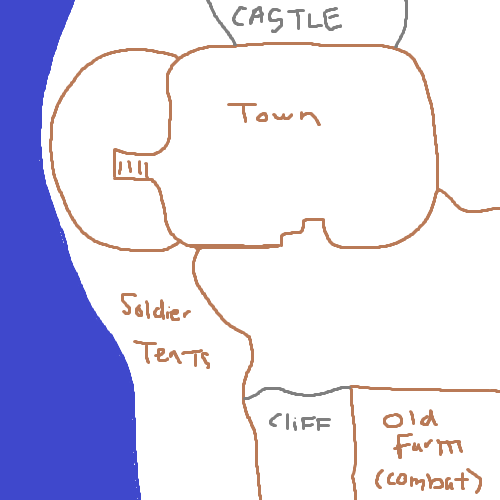
I moved the sketch into Unreal to create a blockout using planes, terrain, and simple geometry. The focus was on spatial relationships, pacing, and player guidance via sightlines and landmark placement. Below we have the first iterations of the courtyard and exterior areas.
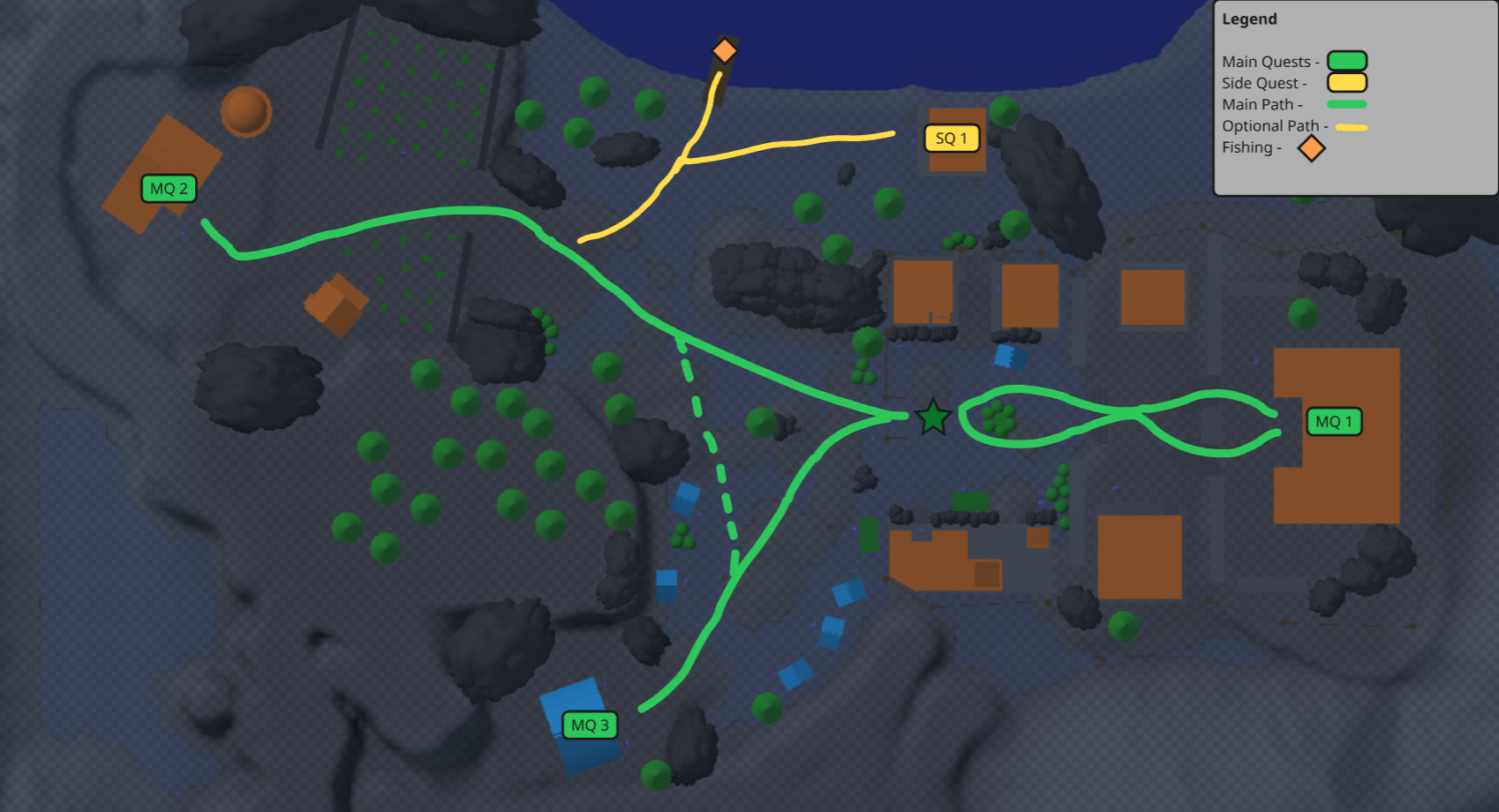
With the major points of interest positioned, I began the first playable iteration of the hub. This stage focused on bringing the space to life while establishing clear player guidance, using leading lines, visual cues, and path placement to connect the courtyard to the farm and tents. These early adjustments emphasized flow, sightlines, and natural navigation, ensuring players could intuitively move through the space while noticing optional areas and points of interest. I also started introducing elevation to key areas to establish hierarchy and draw player attention, using height differences to make important spaces more visually prominent and to subtly guide player movement through the hub.
Environmental props and quest givers were strategically placed to guide player behavior and reinforce narrative context. Natural props such as bushes, rocks, and terrain features were used to shape player movement, improve spatial readability, and create clear navigation paths, while NPCs and interactable objects introduce objectives, resources, and story beats. This allows the environment itself to teach mechanics and encourage exploration without relying on explicit UI.
Iterative playtesting informed adjustments to pacing, path clarity, and task visibility. Feedback helped ensure that both short-term objectives and long-term exploration goals were readable and engaging. I introduced large rock formations to act as movement and sightline blockers, helping simplify visual noise and improve spatial readability. Prop density was increased across key areas to make spaces feel more lived-in while subtly shaping player movement. An optional path branching to the right of the main courtyard gates was added to support exploration and lead to a side quest, reinforcing player choice. Peripheral props were placed to guide players forward without fully obstructing movement, maintaining flow while discouraging unintended routes. Finally, the main soldier tent was elevated and positioned within clear view from the farm area to improve landmark visibility and help players reorient themselves when exiting the farm.
Clear sightlines guide players intuitively without overt handholding.
Branching paths and optional objectives encourage exploration and strategic choice.
Iterative testing refined pacing and ensured clarity for both short-term and long-term goals.